
Website Strategy for Interior Designers and Architects: The Complete Guide
Last updated: April 2026 · 15 min read
Most interior designers build their website backwards.
They start with how it looks. They choose colours, fonts, and a layout that reflects their aesthetic. They fill it with beautiful photography. They launch it.
And then they wait.
The enquiries that were supposed to follow often do not arrive. Not because the site is not beautiful. But because looking good and working well are two very different things. A website that sits quietly in the background, however stunning, is not doing its job.
This guide is about building a website that does both: one that reflects the quality of your work and actively brings in the right clients.
For the full picture on getting found in search, see the companion guide: SEO and GEO for Interior Designers and Architects: The Complete Guide.
What website strategy actually means
Website strategy is the thinking that happens before anyone opens a design tool or writes a word of copy.
It answers four questions. Who is this website for? What do you want them to do when they land on it? What do they need to see, read, or feel in order to take that action? And how does the structure of the site make all of that as easy as possible?
Without that thinking, a website is just a collection of pages. With it, every page has a purpose, every section earns its place, and the journey from first visit to enquiry is clear and deliberate.
For interior designers and architects, website strategy matters more than in most industries. Your clients are visual, discerning, and often comparing several studios before making contact. Your website is doing the work of a first meeting before you have ever spoken to them. It needs to communicate taste, expertise, and trustworthiness within the first few seconds of landing.
That is a strategic challenge as much as a creative one.
Get the right people involved, in the right order
The single most common and most costly mistake in a website project is bringing people in at the wrong stage.
The right order is:
Brand strategist first. They define your positioning: who you are, who you serve, what makes you different, and how you want to be perceived. Everything else flows from this.
SEO and GEO specialist second. Before a copywriter writes a single word, keyword research and competitor analysis need to shape the site architecture. Which pages should exist? What should they be called? What are your potential clients actually searching for, and which of those searches represent a realistic opportunity for you? These are questions with specific, researchable answers. Getting them right at this stage determines whether your site can be found at all. Getting them wrong means your copywriter writes beautiful copy for pages that nobody will ever discover.
Copywriter third. With positioning and keyword targets defined, the copywriter writes to a clear brief: the right words, on the right pages, for the right audience.
Developer and designer last. They build and style the structure that strategy and copy have already defined. Changes at this stage are execution, not rethinking.
This sequence costs the same as any other. It produces dramatically better results because every decision is informed by the thinking that came before it.
FREE Website Audit
The first step to better SEO is knowing what's working and what isn't. I offer a free website performance audit for interior designers and architects — a no-obligation review of your current site and SEO position, with specific recommendations you can act on immediately. This is a mini-version of my The Website Performance & SEO Audit Package
Claim your free website audit →The pages your website actually needs
Page structure is one of the most important and most underestimated decisions in a website build. Here is what a well-structured solo studio site looks like.
Homepage
Your homepage is your first impression and your clearest opportunity to rank for your primary keyword.
It needs to answer three questions in the first few seconds: who you are, who you work with, and where you are based. That means a main heading (your H1) that includes your service and location. Not “welcome to my studio.” Something like: “Residential Interior Designer in Edinburgh. Creating calm, considered homes.”
Your homepage should link clearly to your key service pages, your about page, your portfolio, your blog, and your free audit or contact CTA. It is the top of your site hierarchy. Everything important should be reachable within one click.
One page per service
A single Services page listing everything you offer is one of the most common structural mistakes on design websites.
Each distinct service needs its own dedicated page. A potential client searching for “kitchen designer Edinburgh” is different from one searching for “interior design consultation” or “home office design.” One page cannot rank well for all three searches. Three pages, each focused on one service, can.
Each service page should have at least 400 words of genuine, helpful content: what the service involves, who it is right for, what the process looks like, and what a client can expect. A heading, a paragraph, and a contact button is not enough.
About page
Your about page is not a biography. It is a trust page.
For a personal brand, it is often the second most visited page on the site and frequently the page that determines whether a visitor makes contact. It is where a potential client decides whether they like you enough to reach out.
It should include who you are, your location and specialism, your experience, and something genuine about why you do what you do. A real photograph of you matters more than most designers expect. People hire people. Showing up as a person rather than a brand increases enquiries.
Portfolio and case studies
More on this below. The short version: galleries show what you have done. Case studies show how you think. Both matter. Case studies convert better.
Blog
Your blog is your long-term SEO engine. Each post is a new entry point to your website, targeting a specific question your ideal client is already searching for. It builds topical authority over time and signals to Google and AI search tools that your site is a genuine, regularly updated resource.
For more on how to build a blog content strategy that actually drives traffic, see [Content Strategy for Interior Designers: What to Write to Attract Clients — link to cluster 3 post].
Pillar resource pages
A pillar page is a comprehensive guide to a broad topic, living permanently outside the blog at a clean URL. This page is an example of one.
For your studio, the equivalent might be a guide to hiring an interior designer, a guide to the renovation process, or a guide to a specific design style you specialise in. These pages build authority, attract backlinks, and give AI search tools substantive content to cite.
Portfolios, case studies and video
From gallery to case study
A gallery page shows finished rooms. A case study tells the story of a project.
That difference is significant for two reasons. First, case studies convert better. A potential client reading about how you approached a brief, solved a problem, and delivered a result is forming a relationship with you before the first call. A gallery of beautiful images, however impressive, does not do that.
Second, case studies rank better. They contain the words and context that Google and AI tools need to understand your work. Location, style, project scope, room type, budget range: all of this appears naturally in a well-written case study. It does not appear in a gallery.
A case study does not need to be long. Three hundred to four hundred words, covering the brief, your approach, the key decisions, and a genuine client quote, is enough. Add it as a dedicated page for each significant project rather than as an entry in a grid.
Video
Video is the most underused asset on interior design websites.
A short walkthrough of a completed project, two to three minutes, filmed in natural daylight on a phone, does more for trust than ten static photographs. It lets a potential client experience the space. It shows your personality and how you talk about your work.
The strategy that multiplies the value: publish every video on YouTube first, then embed it on your website.
YouTube is the world’s second largest search engine. A video titled “Edinburgh living room transformation: calm, modern family home” reaches people searching on YouTube as well as on Google. You are building two channels of visibility from one piece of content. Each video also increases the time visitors spend on your website pages, which is a signal Google uses to assess quality.
Writing copy that converts
Most interior designer website copy is written in the designer’s language rather than the client’s.
Phrases like “considered layering of materiality” and “spaces that tell a story” are meaningful to a design professional. They are largely invisible to a potential client who is searching for “calm modern interior designer London” and wants to know whether you understand their project and can help them.
Good website copy does three things. It speaks to the specific person you want to hire you. It answers the questions they have before they ask them. And it uses the words they actually use when searching, not the words you use when describing your work.
Practically, this means:
Service pages should describe outcomes as much as process. Not just what you do, but what the client gets and what working with you is like.
The about page should feel like a person, not a profile. Write it the way you would introduce yourself to a potential client at an event.
The homepage should be clear above all else. A visitor who cannot tell within five seconds what you do and who you work with will leave.
Project descriptions should include location, style, scope, and the client’s starting point. These are the words Google and AI tools use to match your work to searches.
Technical foundations
A beautifully designed website that loads slowly, breaks on mobile, or cannot be crawled by Google is a website that will not rank. Technical SEO is not glamorous, but it is non-negotiable.
Site speed. Large, uncompressed images are the most common cause of slow loading times on design websites. Compress every image to WebP format before uploading. Aim for file sizes under 150KB per image. Use a tool like ShortPixel or Squoosh.
Mobile optimisation. More than half of web searches happen on a phone. Google uses the mobile version of your site to determine rankings. Every page must be easy to read and navigate on a small screen without pinching or zooming.
HTTPS. Your site must be served securely. The padlock in the browser address bar confirms this. Most hosting providers include SSL certificates by default.
Clean URLs. Short, descriptive, keyword-relevant URLs. No dates in evergreen content. Hyphens between words, never underscores.
No broken links. A link that leads to a 404 page is a dead end for both visitors and search engines. Audit your site every six months.
Schema markup. Structured data code that helps Google understand what type of content each page contains. For a design studio: LocalBusiness schema on the homepage, Article schema on blog posts, FAQ schema on pages with question and answer sections. Most WordPress SEO plugins handle this automatically.
Your website and SEO
Website strategy and SEO strategy are not two separate things. They are the same conversation.
The structure of your site, the pages that exist, the words on those pages, the way they link to each other: all of these are SEO decisions as much as design decisions. A website built without SEO thinking baked in from the start will always underperform one where search visibility was part of the original brief.
The most important SEO decisions happen before launch: which pages to create, what to call them, which keywords to target on each one, and how to connect them through internal linking.
For a full breakdown of every SEO component and how it applies to your studio, the Complete Guide to SEO and GEO for Interior Designers covers everything in detail.
FREE Website Audit
The first step to better SEO is knowing what's working and what isn't. I offer a free website performance audit for interior designers and architects — a no-obligation review of your current site and SEO position, with specific recommendations you can act on immediately. This is a mini-version of my The Website Performance & SEO Audit Package
Claim your free website audit →Your website and AI search
In 2026, being found on Google is not the whole story.
AI-powered search tools including Google AI Overviews, ChatGPT, and Perplexity are increasingly generating direct answers to search queries, citing the sources they find most credible. The websites that get cited are not always the ones that rank highest in traditional search. They are the ones that are written most clearly, structured most helpfully, and demonstrate expertise most consistently.
Five things your website can do right now to improve AI search visibility:
Write in plain, direct sentences. AI tools extract and summarise. Dense paragraphs and jargon slow that process down and reduce the likelihood of citation.
Add FAQ sections to key pages. Questions and answers are among the most commonly cited content formats in AI-generated responses.
State your location and speciality explicitly. Do not assume AI tools will infer where you are based or what you specialise in. Say it clearly on every relevant page.
Keep your content current. Add a “Last updated” date to your pillar pages and key service pages. Refresh them quarterly.
Build consistency across the web. AI tools draw from multiple sources: your website, LinkedIn, press mentions, directory listings, and client reviews. The more coherently your expertise appears across all of these, the more confidently AI tools will cite you.
Measuring what matters
A website without measurement is a website you cannot improve.
Set up Google Search Console from day one. It shows which keywords your site is appearing for, how many people are clicking through, and which pages are performing. It is free and takes twenty minutes to install.
Add Google Analytics 4 to track visitor behaviour: which pages people land on, how long they stay, which pages they visit next, and where they drop off before making contact.
The metrics worth watching for a solo studio:
Organic impressions: how many times your pages appear in search results. This grows first, before clicks do.
Organic clicks: how many people actually visit from search. This follows impressions by a few weeks or months.
Average position: where your pages are ranking for their target keywords.
Enquiries from organic search: the number that matters most. Set up a goal in Google Analytics 4 that tracks contact form submissions originating from organic search.
Expect the first meaningful signals after three to four months of consistent work. The compounding returns come after twelve months.
Where to start
Whether you are building from scratch or working with an existing site, the starting point is the same: understand where you stand before deciding what to change.
A structured website audit tells you which pages are missing, which are underperforming, which technical issues are affecting your ranking, and which opportunities your competitors are exploiting that you are not. It turns a vague sense that “the website is not working” into a specific, prioritised list of actions.
That is exactly what the free website performance audit for interior designers and architects does. In 30 to 45 minutes you will have a clear picture of your current position and a practical plan for what to do next.
Ready to see where your website actually stands?
The Website Performance & SEO Audit Package
A comprehensive, jargon-free audit designed for interior designers and architecture practices. You get a clear picture of where your website stands, what is holding you back, and exactly what to do next. No technical overwhelm. Just honest answers and a practical roadmap.
- Full technical website performance review
- On-page SEO and local SEO assessment
- AI search readiness and GEO gap analysis
- Content and keyword opportunity review
- Full written report with prioritised recommendations
- 2 x 60 minutes strategy session to walk through findings together
Investment
£ 499
+ vat
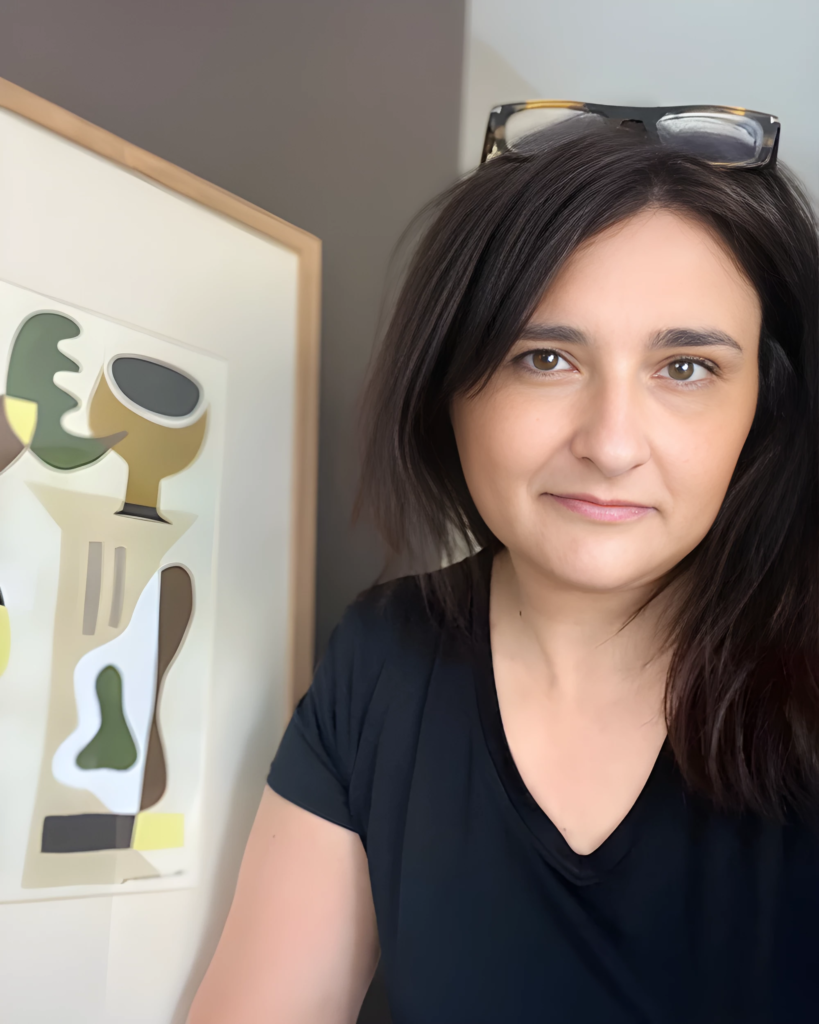
About the Author
Alessia Civettini is a fractional SEO consultant and website strategist with over five years’ experience specialising in interior designers and architects. She helps solo practitioners and small studios build a powerful online presence — from website strategy to SEO, GEO, and AI-powered search.
In a field evolving faster than any other in digital marketing, Alessia is in constant professional development — staying at the forefront of
AI search, generative engine optimisation, and the signals that matter most right now. Her clients get strategy that reflects today’s search
landscape, not last year’s best practice.